Process
Demolition waste and soil spoil in Victoria
Demolition waste disposal in Melbourne gets muddy, literally, when a knockdown and a site cut are booked as one thought. The house produces concrete, brick, metal and timber. The cut produces soil. They leave the site in different ways, they are received differently, and mixing them because it is convenient on the day makes both loads worse. This is how we separate them on jobs in Melbourne’s west, without pretending a bin is a magic sorting machine.
What comes out of the building
A house knockdown produces streams you can see. Metal, including roofing and steel, is worth keeping apart because it loads cleanly with a grapple and it is the stream recyclers actually want. Concrete and brick are heavy and they belong together only when the facility will take that masonry mix. Timber from the frame is its own pile. Plaster, carpet and mixed household junk are the awkward remainder, and they should not be hidden inside the cleaner piles just to make the site look tidy.
Waste is sorted on site and taken to licensed recycling and disposal facilities in Melbourne's west, with concrete, brick, metal and timber separated for recycling wherever possible.
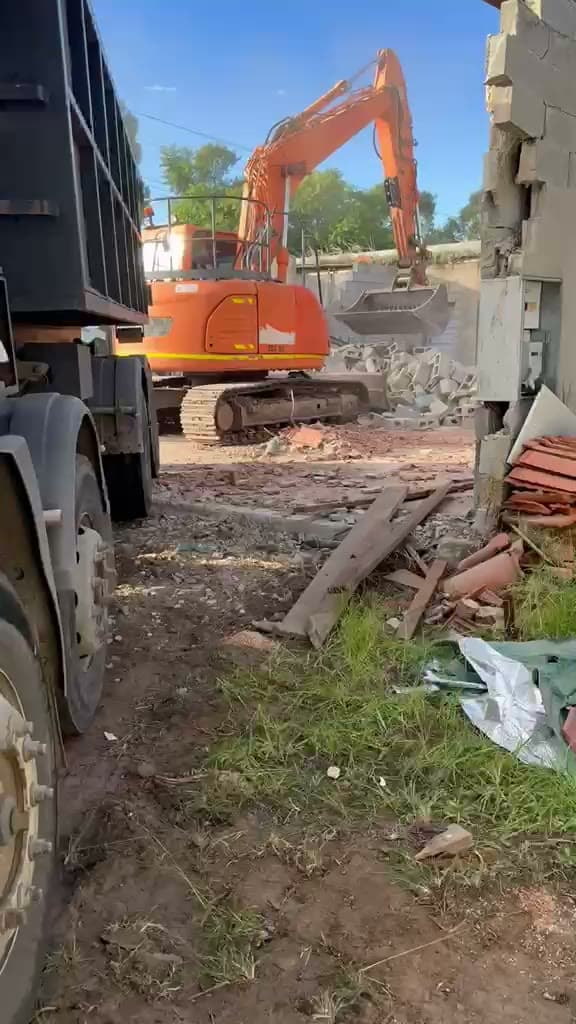
That sentence is the method. Sorted means the excavator and the crew put materials in different places while the building is coming down, not that someone picks through a single heap afterwards. On a block outbuilding, timber is stacked away from the masonry before either stream goes into the hooklift bin. On a house, roofing and steel are lifted straight into the bin with a rotating grapple. The point is the same: do not create a mixed pile you then have to unmix.
What comes out of the ground
Soil from a site cut is spoil, not demolition waste. In Melbourne’s west that is often red clay, sometimes with rock, and sometimes wet enough that a truck has to be thought about before it is loaded. It is dug with a bucket, checked against a laser level, and carted as earth. It is not a substitute for a bin of broken concrete, and a facility that takes rubble is not automatically the place that takes the clay.
If the cut uncovers something that is not ordinary soil — a stain, a smell, an old tank, fill that is clearly rubbish — we stop. We are not going to keep digging and hope the load is fine. You need to know before that material is carted, because where it can go depends on what it is. We will not invent a classification from the cab of the excavator. A photo of the hole and a plain description is how that call starts, and the machine waits while you decide.
Why mixing them costs you
A bin of concrete with a bucket of clay through it is harder to recycle than the concrete alone. A load of spoil with bricks and timber in it is harder to place than clean fill. The crew also loses time if everything is thrown in one heap and then pulled apart at the end of the day, which is when everyone is tired and the light is going. Sorting as we go is slower for ten minutes and faster for the rest of the job.
It also keeps the quote readable. Demolition cartage and spoil cartage are different lines. If both are required, both should be written down. If only the house is in the quote, we are not going to start cutting the yard because the machine is already there and the clay looks easy. Extra digging is a variation. You should hear about it before the bucket goes in, not when the invoice arrives.
What we need you to tell us
Say whether the job is the building, the ground, or both. Say if a pool is being filled, if a tank is coming out, or if you have been told the soil was filled years ago. Say if the builder wants the clay left on site in a nominated spot rather than carted. Leaving spoil on site is sometimes the right call and sometimes a mess for the next trade. It has to be a decision, with a place to put it that is not the neighbour’s fence.
Asbestos is a different problem again. If the building might contain it, licensed removal happens before we start creating waste. We do not mix suspect sheet into a timber pile and call it sorted. Household chemicals, paint and fuel do not go in the demolition bin either. Empty the shed of those before we arrive. Anything you still want — timber, bricks, a roller door, a water tank you are keeping — needs to be out, or marked, the day before.
A clean site is a sorted site
The block should be walkable when we leave, with the streams gone to where they were supposed to go. Fencing still up if it needs to be. No half-loaded mess left for you to finish with a trailer over the weekend, unless that trailer was the arrangement. If you are keeping bricks or sleepers, we stack them where you asked, off the building area.
If you are planning a knockdown and a cut, read them as two materials stories that happen to share a machine. Book them together when the information is ready. Keep the waste streams apart either way. That is the whole trick, and it is not a slogan. It is how the concrete, the metal, the timber and the clay each leave Melbourne’s west in a state a receiving site can actually take.
Quick answers
The short version, if you skipped the scan.
Is soil from a site cut demolition waste?
No. Demolition waste is the building: concrete, brick, metal, timber and the mixed remainder. Soil from a cut is spoil and it is carted as earth, not thrown through the rubble.
Do you sort waste on site?
Yes. Concrete, brick, metal and timber are separated for recycling wherever possible, then taken to licensed recycling and disposal facilities in Melbourne’s west.
Can you leave the clay on site?
Only if you have nominated a place for it and the next trade agrees. Otherwise it is carted. We will not push it against a fence and call that finished.
What should be out of the house and shed before you start?
Anything you still want, plus paint, fuel, chemicals and other household leftovers. If asbestos might be present, that is assessed and, where required, removed by a licensed remover before we create waste.
Get a free quote
Suburb, photos, and what you want left behind. We call back within one business day.
Prefer to talk now
0434 999 799Or email info@rsdemo.com.au