Areas
Acreage demolition near Melton: Toolern Vale and Diggers Rest
Acreage demolition near Melton is a different job from a house in a court. On a block in Toolern Vale, Diggers Rest or out toward Bacchus Marsh, the house is often only one item on the list. There is a hay shed, a machinery shed, a couple of tanks, a set of old yards, and a pile of something that has been behind the shed for twenty years. The machine has to come down a long driveway and through a farm gate. Here is how we plan that kind of job.
Start with a walk-around list
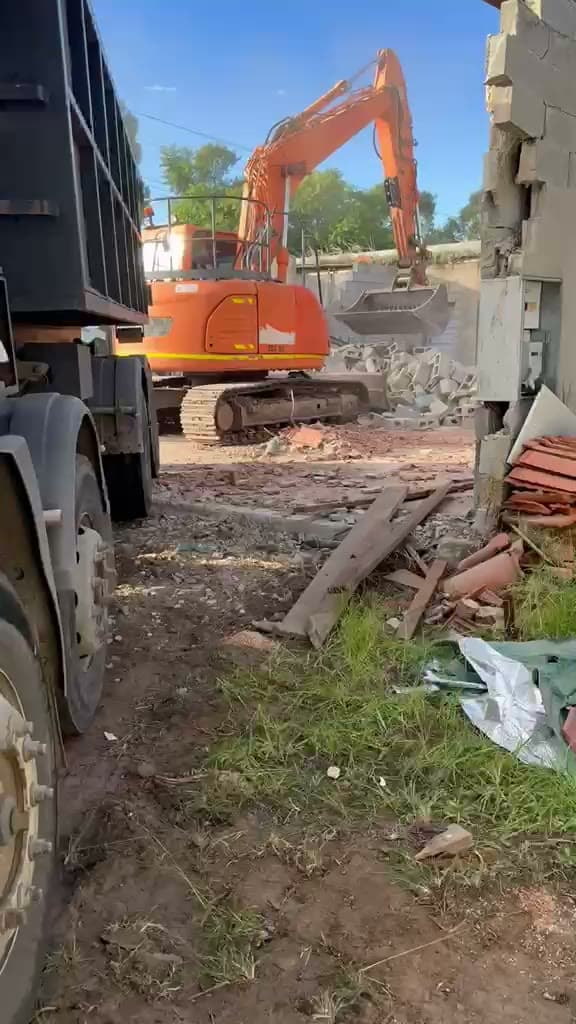
Walk the property and write down every structure, even the ones that seem too small to mention. House. Sleep-out. Hay shed. Steel machinery shed. Chook shed. Old dairy or stables. Water tanks, above or below ground. Septic. Stock yards and the fences that run off them. Concrete pads where something used to stand. For each one, say whether it goes or stays, and whether the slab or footings under it go too.
Then add what you know about the ground. Where is the septic tank? Where do the power and water run? Is there a bore? Is there an old farm tip, a burn pit or buried rubbish? Older acreage nearly always has some of these. Knowing where they are before the machine starts is the difference between a planned day and a day spent digging around a pipe nobody mentioned.
Access is the first price question
In town, access means the frontage and the court. On acreage it means the road in, the gate, the driveway and the ground. Measure the gate. Photograph the driveway from the road, and from halfway down. Tell us if the driveway crosses a creek, a culvert or a soft paddock. A float carrying an excavator and a truck carrying a full hooklift bin both need firm ground and room to turn.
A long internal drive adds time to every load, so a house at the road and a house at the back of a long drive are not the same price, even on the same road. Wet weather matters more out here, too. After a week of rain a paddock that was fine in summer can bog a truck. We will tell you if the timing should move. Waiting a few dry days is cheaper than dragging a bin out with a tractor.
Sheds, tanks and farm structures
Steel sheds come down with the excavator and a grapple, and the sheeting and frame go to metal recycling. Timber sheds and old hay sheds are timber, iron and a lot of dust, so empty them of anything you want first. Old fuel drums, chemicals, sheep dip and paint have to be out before we start. They are not demolition waste and they need their own proper disposal.
Concrete tanks are broken and loaded as concrete. Poly tanks can often be kept if you want them, so say so. Underground tanks need to be found, emptied, and then removed or filled, depending on what the next owner or builder wants. Taking a septic system out of use is a council and plumber question as well as a demolition one, so check what they expect before the day.
Old farmhouses
Older farmhouses around Toolern Vale and Diggers Rest are often weatherboard that has been added to many times. A room from the 1950s, a sleep-out from the 70s and a bathroom from the 90s can all hang off the same frame. That mix makes asbestos more likely, especially in eaves, wet areas, sleep-outs and sheds. An asbestos assessment comes first, and licensed removal comes before the knockdown when the report says so.
The house itself is usually straightforward once that is done. We isolate services, take the structure down, and keep roofing, timber, brick and concrete apart as we load. On acreage there is often room to sort properly on site, which keeps more of it out of landfill. We leave the house pad clear, or take out the slab and footings if you ask for that.
Fire season and timing
Out on the rural edge of Melton, fire season changes how we work. Excavators and trucks can throw sparks, and dry grass catches fast. In high-risk weather we may change the hours, keep extra water on site, or move the day. On a Total Fire Ban day we follow the rules for that day, and some work simply waits. If you can, plan acreage demolition for the cooler months.
Waste is sorted on site and taken to licensed recycling and disposal facilities in Melbourne's west, with concrete, brick, metal and timber separated for recycling wherever possible. On acreage we do not bury demolition waste on the property, even when there is room. It is carted. We are based in Melton, and Toolern Vale, Diggers Rest and the rural edge toward Bacchus Marsh are a short run from our yard. Send the address, the gate width and your list, and we will tell you how we would tackle it.
Quick answers
The short version, if you skipped the scan.
Do you demolish farm sheds and hay sheds near Melton?
Yes. Steel sheds, hay sheds, machinery sheds and old stables are a normal part of acreage work around Toolern Vale, Diggers Rest and Bacchus Marsh.
Can you remove an old septic tank?
We can break out and remove or fill a tank once it has been emptied. Taking a septic system out of use is also a council and plumber question, so check their requirements first.
Does a long driveway cost more?
It can. Every load has to travel the drive, and soft ground slows trucks down. Send photos of the gate and the driveway so we can price it properly.
Can we keep the water tanks?
Yes, if they are in good shape and you tell us before the day. Mark anything that stays and we will work around it.
Get a free quote
Suburb, photos, and what you want left behind. We call back within one business day.
Prefer to talk now
0434 999 799Or email info@rsdemo.com.au